


Common materials, advantages and applications of CNC precision machining
CNC precision machining is the process of creating parts by cutting and shaping raw materials. This process relies on computer-aided design (CAD) and computer-aided manufacturing (CAM) technologies. These software not only provides detailed 3D models but also optimizes machining paths to ensure precise part fabrication, thereby improving production efficiency and quality.
Precision machining has become an essential component of modern manufacturing and requires close collaboration between professional designers and engineers. Designers create product models and translate them into executable manufacturing instructions, while engineers optimize machining parameters to ensure feasibility. Finally, technicians input the prepared CNC code into the CNC machine to execute the machining operations, ensuring that the part meets the required precision.
Precision machining is widely used in various industries, including automotive parts, medical devices, and electronic components. Advanced CNC machine tools enable the production of high-precision parts with complex geometries. While CNC machine tools typically maintain a machining tolerance of ±0.005 inches, CNC precision machining can achieve even higher accuracies, reaching tolerances of ±0.002 inches or even ±0.0002 inches, meeting the stringent dimensional accuracy requirements of high-end manufacturing.
Common Types of CNC Precision Machine Tools
Precision CNC machining involves a variety of technologies to ensure the production of high-quality parts. Different machining processes utilize different types of machine tools. Some processes require only a single CNC machine, while complex processes may require multiple machines working in concert.
1. CNC Milling Machine
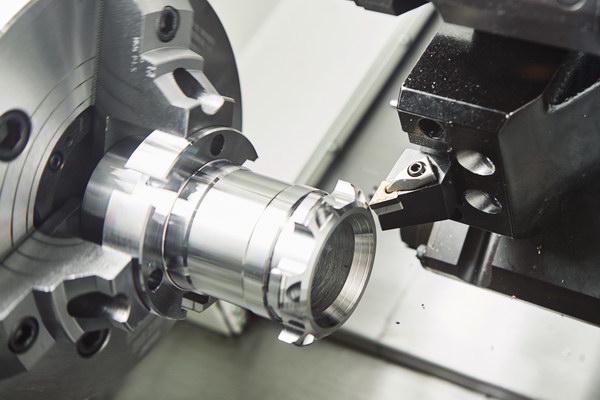
CNC milling machines use a rotating cutting tool to remove material and reshape fixed raw material. They can process a wide range of geometries and are primarily classified into two categories: face milling and peripheral milling.
Face milling: Capable of machining features such as flat surfaces and shallow cavities.
Peripheral milling: Used for machining deeper structures such as threads and grooves.
CNC precision milling machines are typically used to manufacture square or rectangular parts and can achieve high precision.
2. CNC Lathe
The difference between CNC lathes and CNC turning machines is that, unlike CNC milling machines, which use a fixed workpiece and rotating cutting tool, CNC milling machines use a rotating workpiece and fixed cutting tool to perform machining. The tool moves along the workpiece's axis, removing material layer by layer to achieve the desired diameter and feature.
A CNC Swiss lathe is a special type of CNC lathe that uses a guide bushing to support the workpiece while simultaneously feeding it axially. This design provides more stable support and higher part accuracy, making it particularly suitable for machining slender parts and those with tight tolerances.
CNC lathes can produce internal and external features on parts, such as:
Holemaking (drilling, countersinking, reaming);
Internal and external threads (tapping, threading);
Tapers and grooves;
Common parts include bolts, screws, and shafts.
3. CNC Drilling Machines
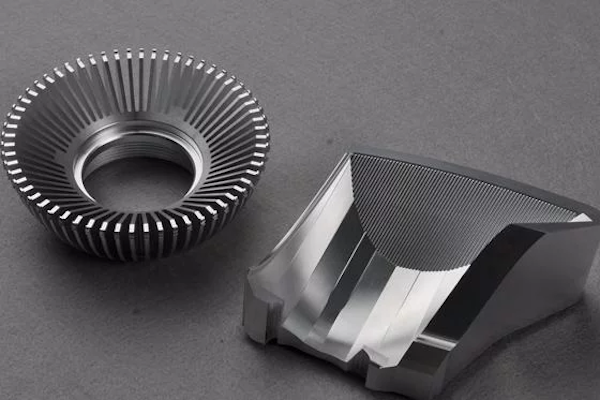
CNC drilling machines use a rotating drill bit to create cylindrical holes in materials. These drill bits are typically multi-edge tools that provide efficient chip removal and ensure high-quality holes.
Common drill bit types include:
Spotting drills: Used for shallow or pilot holes.
Drill presses: Used for custom drilling.
Screw machine drills: Allow direct drilling without pre-drilling a pilot hole. Chucking drills: Used to enlarge existing holes and improve precision.
Peck drills: Reduce chipping during machining and improve drill quality.
4. Electrical Discharge Machine
Electrical discharge machining (EDM) uses controlled electric sparks to remove material and achieve precise shaping. During machining, the workpiece is placed beneath a wire electrode. The CNC machine tool releases high-frequency electric sparks through the wire electrode, melting the metal locally. The melted portion is then flushed away with an electrolyte to form the desired shape.
EDM is suitable for machining high-hardness materials and complex, small features such as precision slots, micro-holes, bevels, and tapers. It is particularly suitable for metals that are difficult to machine using traditional machining.
5. CNC Plasma Cutters
CNC plasma cutters use a high-temperature plasma arc to cut conductive materials. Their plasma torch can reach temperatures exceeding 50,000°F (approximately 27,760°C), rapidly melting the material and achieving precise cuts.
Plasma cutting is suitable for conductive metals such as steel, aluminum, stainless steel, copper, and brass.
6. CNC Precision Grinders
CNC precision grinders are used to process parts with stringent surface finish requirements. While CNC lathes and milling machines are typically used for initial roughing, precision grinders can perform high-precision surface finishing, ensuring micron-level smoothness.
Precision grinding processes are particularly critical in the manufacturing of molds, precision bearings, optical components, and medical devices.
Common Materials Used in CNC Precision Machining
CNC precision machining can be used for a wide variety of materials, generally categorized as metals and plastics.
Metal Materials
CNC precision machining is widely used for a wide variety of metal materials, regardless of their hardness or strength, using advanced machining techniques to achieve efficient and high-precision cutting.
Common CNC-machined metals include:
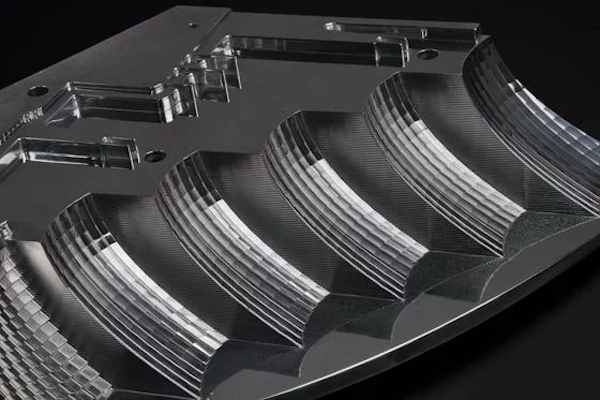
Aluminum – Lightweight and corrosion-resistant, it is suitable for use in industries such as aerospace, automotive, and electronics.
Steel – High mechanical strength, it is suitable for structural and mechanical component manufacturing. Stainless Steel – Corrosion-resistant, widely used in medical, food processing, and chemical equipment.
Copper – Excellent electrical and thermal conductivity, commonly used in electrical components and heat sinks.
Brass – Excellent machinability, suitable for precision instruments, valves, and decorative parts.
Bronze – High wear resistance, commonly used in bearings, gears, and marine equipment.
Titanium – High strength, lightweight, and corrosion resistance, widely used in aerospace, medical implants, and other fields.
Plastic Materials
CNC precision machining is not only suitable for conventional plastics, but also for a variety of engineering plastics to meet diverse application requirements. CNC machining ensures high quality while achieving cost-effective production.
Common CNC plastic machining materials include:
Acrylonitrile Butadiene Styrene (ABS) – Excellent mechanical properties and impact resistance, suitable for automotive parts and consumer electronics.
Polycarbonate (PC) – Transparent, strong, and heat-resistant, widely used in optical components and protective covers. Polymethyl methacrylate (PMMA, acrylic) – Highly transparent, suitable for applications such as lampshades and display panels.
Polyoxymethylene (POM, siasteel) – High mechanical strength and wear resistance, suitable for precision parts such as gears and pulleys.
Polyamide (PA, nylon) – Excellent wear resistance and toughness, suitable for mechanical components and engineering structures.
Advantages of High-Precision Machining
In precision manufacturing, high precision and repeatability are key requirements for cost-effective and high-quality production. CNC precision machining offers several advantages that meet stringent performance and quality requirements. The following are the key advantages of CNC precision machining:
1. Advanced Machining Technology
CNC precision machining utilizes state-of-the-art manufacturing technology, compliant with Industry 4.0 standards, significantly reducing reliance on manual labor and enabling precise control of the operation of large-scale machinery.
Regardless of the CNC machine tool used, computer programs enable a high degree of automation, precisely controlling the cutting tools to process a wide range of raw materials, ensuring the finished product is dimensionalally accurate and consistent.
2. Superior Performance and High Reliability
While traditional machining methods can meet certain application requirements, for parts with tight tolerances, only high-precision machining can ensure consistent quality.
Furthermore, many industries require high-volume production of identical parts. CNC precision machining offers exceptionally high repeatability, ensuring that every workpiece maintains consistent dimensions and quality, meeting stringent industry standards.
3. Wide Range of Material Compatibility and Applications
CNC precision machining is suitable for a wide range of materials, including high-performance metals and engineering plastics, providing flexibility across various industries, enabling companies to customize high-precision parts and enhance their market competitiveness.
Furthermore, high-precision machining consistently meets stringent engineering tolerances, enhancing customer confidence. Industries across the automotive, aerospace, marine, agriculture, consumer electronics, and precision manufacturing sectors benefit from CNC precision machining.
4. Consistent and Reliable Part Quality
The quality of CNC precision machining far exceeds that of traditional machining methods. By utilizing computer numerical control (CNC) technology, errors caused by manual labor are effectively eliminated, ensuring consistent and precise parts.
CNC machine tools can operate for extended periods of time, and combined with advanced software control, they can achieve ultra-high precision even for complex parts, meeting or even exceeding customer quality standards.
5. Shortened production cycles and reduced labor costs
Compared to traditional machining, CNC precision machining offers a higher level of automation and faster production efficiency. It eliminates the need for frequent manual adjustments to the machine tools and can quickly respond to large-scale production demands.
· Traditional machining requires manual monitoring, tool adjustment, and speed control, significantly impacting productivity.
· CNC machining allows for direct execution of offline program execution. A single operator can manage multiple machines, performing tool changes, setups, offline deburring, and quality inspections, significantly reducing reliance on manual labor and lowering labor costs.
This efficient production model ensures faster part manufacturing and shorter lead times, regardless of production volume.
Applications of CNC Precision Machining
CNC precision machining is widely used across multiple industries due to its high production efficiency, cost advantages, wide applicability, and superior quality. The following are the main applications of CNC precision machining in various industries:
1. Automotive Industry
The automotive industry is experiencing rapid technological innovation, with new components constantly emerging and the pace of vehicle iteration and upgrades accelerating. Automakers widely use CNC precision machining to produce high-quality prototypes for functional testing and market validation before entering mass production, ensuring that designs are optimized and meet actual needs.
2. Medical Industry
Medical devices require extremely high precision and must meet stringent tolerances. Examples include:
Orthopedic devices
Safety housings
Implants
MRI-compatible components
These critical components often require precise dimensional control and consistent quality, and CNC precision machining is the optimal manufacturing method to ensure they meet industry standards.
3. Aerospace Industry
The aerospace industry demands extremely high precision and reliability from components, as even the slightest error can endanger personnel safety. Therefore, CNC precision machining is widely used in the manufacture of:
Landing gear components
Bushings
Fluid manifolds
Wing components
The manufacturing of these components requires high-precision, multi-axis machining technology to ensure they meet the stringent standards of the aerospace industry.
4. Electronics Industry
Consumer electronics are trending towards miniaturization, high performance, and lightweighting, placing extremely stringent tolerances on components. CNC precision machining enables high-precision, high-volume production to meet industry demands. Common electronic components include:
Semiconductor chips
Heatsinks
Circuit boards
Other electronic components
CNC machine tools can process tiny, precise structures, ensuring the performance and stability of electronic products.
5. Military and Defense Industry
Defense and military equipment require high-strength, durable, and precision components to ensure reliability in complex environments. CNC precision machining is suitable for manufacturing a variety of military parts, such as:
Ammunition components
Communications equipment parts
Aircraft and ship components
Precision machining ensures the high quality and consistency of these critical components, meeting the stringent requirements of the military industry.